Customer Operations
A triage agent reads incoming requests and classifies them. Specialist agents handle each type using your internal knowledge base and policies. An oversight agent reviews before anything goes out.

One agent can automate a task. A team of agents can run an operation.

Most AI agent projects start the same way. You identify a manual process, build an agent to handle it, and watch it run. That works. But at some point you hit the limit of what one agent can do on its own.
Real business operations are not one person doing everything start to finish. There is a handoff. Someone triages, someone investigates, someone decides, someone acts. Agent teams work the same way. Instead of building one agent that tries to be good at everything, you build a small group of specialised agents that each handle one part of the job and pass work between themselves.
We have been building single agents long enough to know where they strain. Agent teams are how we solve that, not by making individual agents more complex, but by giving them colleagues.

Agent teams work best in operations where multiple steps happen in sequence, different expertise is needed at each step, and the volume is too high to manage manually.
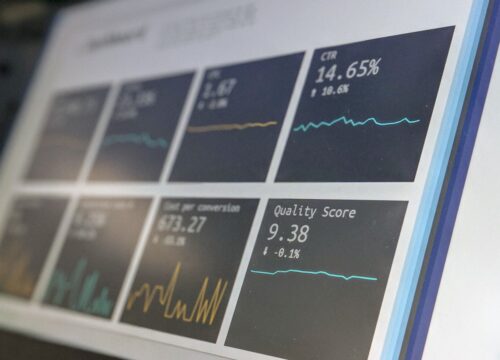
A triage agent reads incoming requests and classifies them. Specialist agents handle each type using your internal knowledge base and policies. An oversight agent reviews before anything goes out.
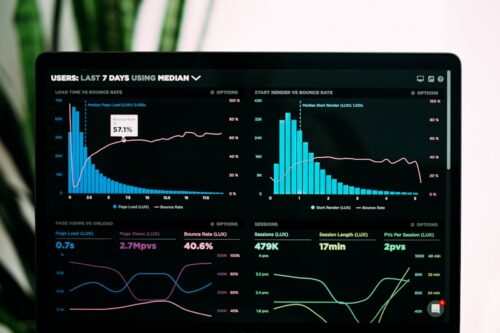
One agent ingests from multiple sources, another validates and cleans, a third analyses, and a fourth generates reports or fires alerts. The team runs on a schedule or reacts to new data as it arrives.

An agent monitors activity against regulatory requirements and flags gaps. A documentation agent drafts the required records. A review agent checks before submission.
A monitoring agent watches your infrastructure. When something trips a threshold, a diagnostic agent investigates, works out severity, and either triggers an automated fix or escalates to your on-call team.

A research agent pulls relevant information, a drafting agent writes the first version, and an editorial agent checks tone, accuracy, and brand guidelines before publishing.
Because agents that try to do too much get worse at everything. They hallucinate more, they lose context over long task chains, and they become hard to debug when something goes wrong. You end up with a system that sometimes works and sometimes does not, and nobody can explain why.
Splitting work across a team means each agent has a narrow scope, so its behaviour is easier to test and trust. When something breaks, you know which agent broke and why. You can swap out or upgrade one specialist without rebuilding the whole system. Need better document analysis? Replace that one agent. The rest of the team does not change.
Governance is cleaner too. Our AI Agent Governance practice works at the team level. Each agent has defined boundaries, logging, and escalation rules. You can audit what happened and why at every step.
And when you need to scale, you add another instance of a specialist or bring in a new one. The supervisor handles the routing. You do not have to rearchitect.
About AI Agent Teams
Three to six is the usual range. Enough to separate concerns properly, not so many that coordination becomes the problem. We start small and add agents when there is a clear reason to, not because more sounds impressive.
Yes, and they often should. A triage agent that classifies requests might run on a faster, cheaper model. A specialist reasoning about complex documents might need something more capable. We pick the right model for each job rather than running everything on the most expensive option.
Every team includes error handling and escalation paths. If a specialist produces output that does not meet quality thresholds, the review agent catches it and routes it back or flags it for a human. All decisions and handoffs are logged, so you can trace exactly what went wrong.
It builds on it directly. If you already have agents we have built, we can coordinate them into a team. If you are starting fresh, we might build the first agent solo and add team capabilities once the use case is proven. We will not push a team architecture where a single agent would do the job fine.
It can actually be cheaper. Specialist agents on smaller models often cost less per task than one generalist on the biggest model available. We design teams with cost in mind. The supervisor handles routing cheaply, and the expensive models only get called when the task genuinely needs them.
Most clients move onto a support retainer where we monitor performance, adjust routing, and add new capabilities as their operations shift. Agent teams are not something you launch and forget about. They need tuning as your processes change.