PayPlayGoour work

PayPlayGo is Appoly’s app for the person who books the pitch every week and then chases everyone for the money. They share one link, everyone pays their share up front, and a place only counts once it’s paid.

Visit payplaygo.com
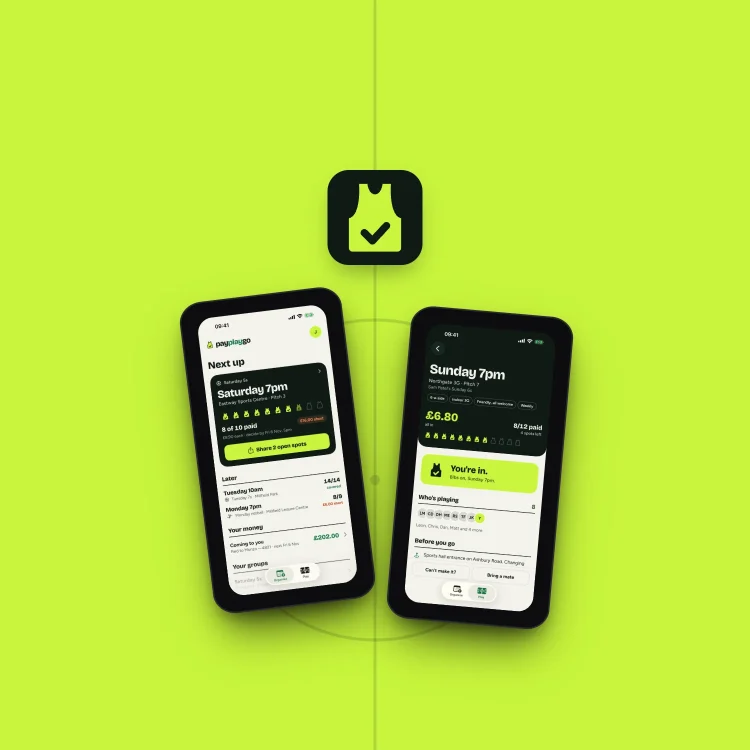
The PayPlayGo bib icon above two app screens on bib-lime green

The Challenge One person carries the booking risk

A weekly game usually has one organiser who books the venue. Venues want paying days or weeks ahead and rarely refund, so when a player drops out late, the organiser tends to cover it.

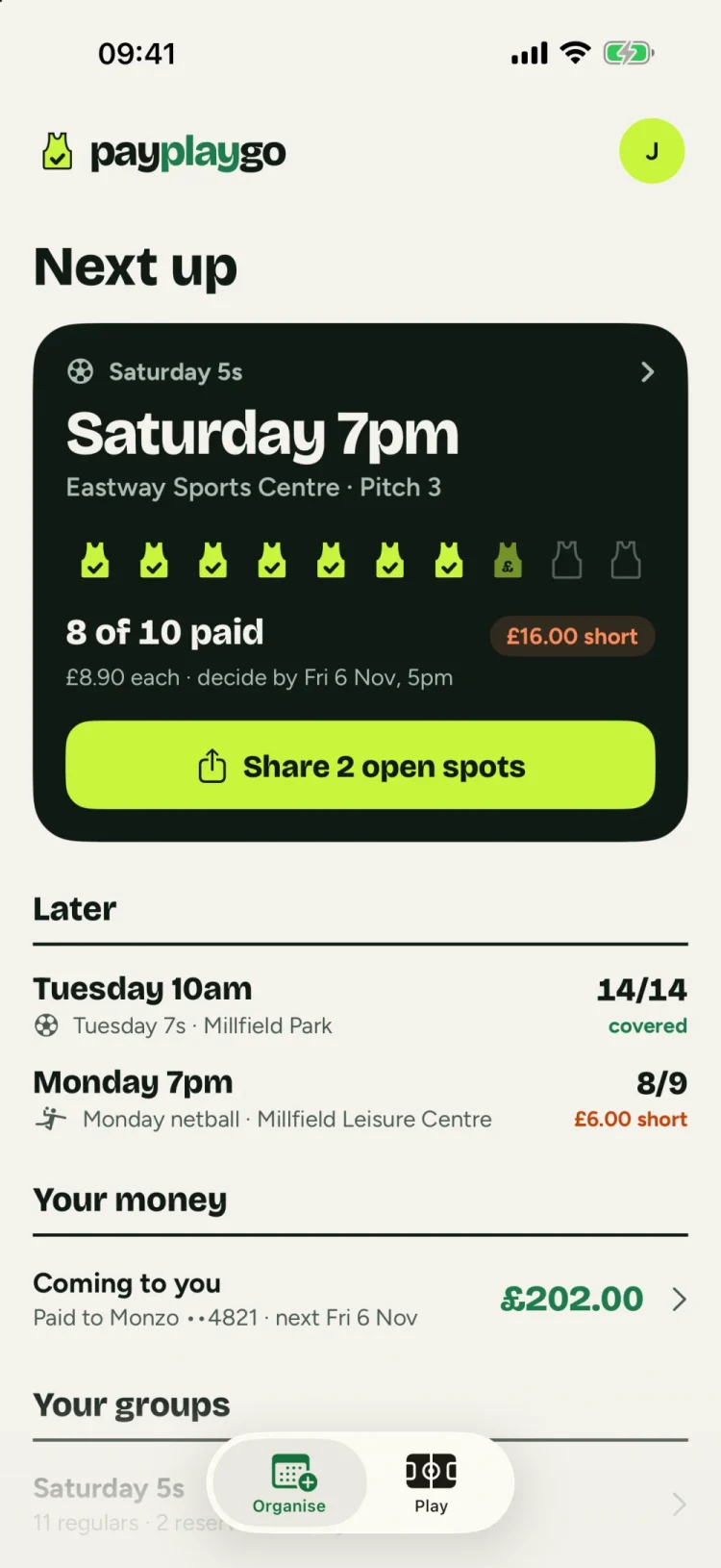
PayPlayGo organiser home: Saturday 7pm, 8 of 10 paid, £16 short, share 2 open spots
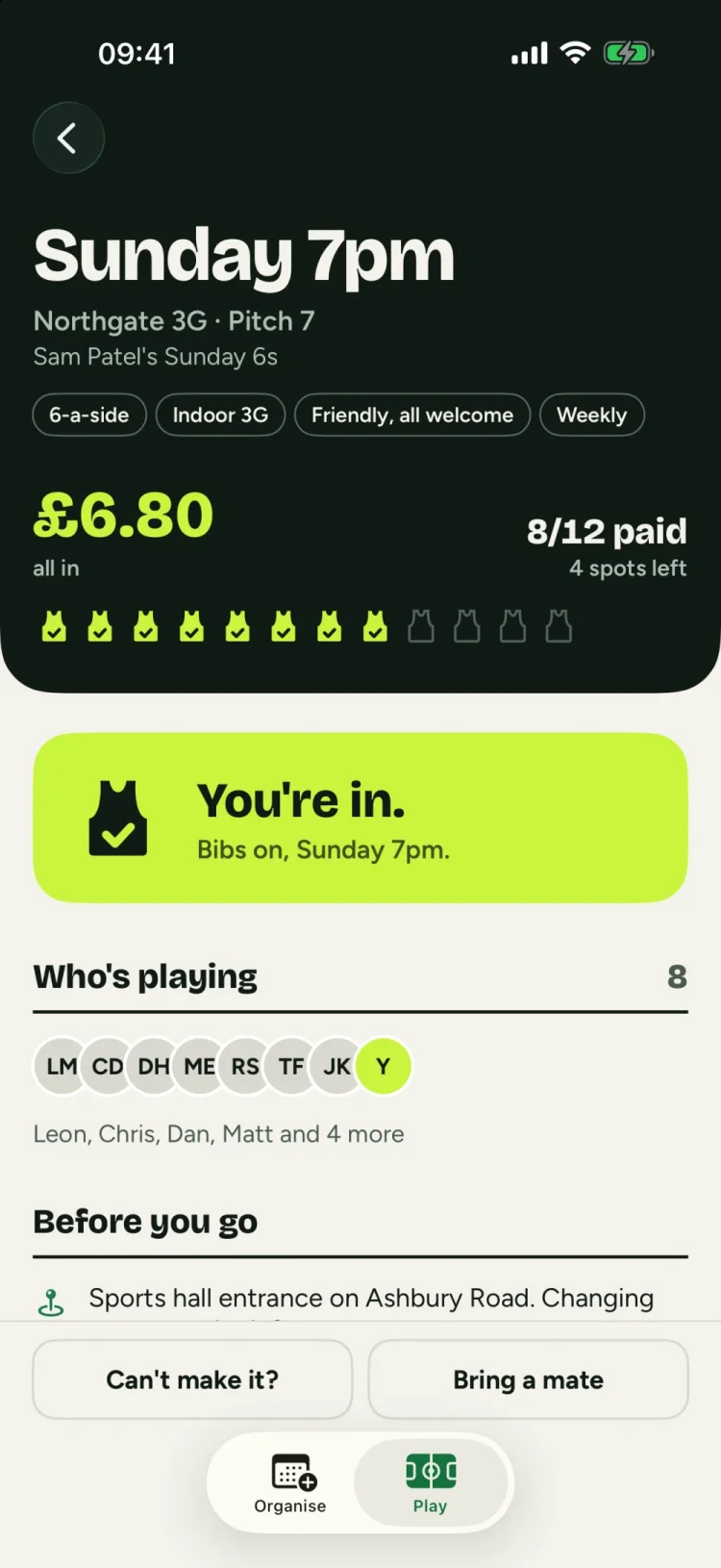
PayPlayGo player view: Sunday 7pm, You are in, bibs on

“I don’t think people will book the pitch until everyone’s paid – it’s why most of these groups fall apart.”

Dan Wade, early tester

That changed how PayPlayGo handles a game that’s short of players. The organiser can move it to another date and keep everyone who has already paid. Each player gets one tap to say they’re still in, and anyone who doesn’t is refunded.

Engineering The hard part was the money

PayPlayGo covers the website, the web checkout, the API and both native apps. We put the most care where products like this usually go wrong: the rules for places and payments, how organisers get paid, and a fee that covers its own costs.

Writing the rules before the code

Before any payment code existed, we wrote down how places and money move: holds, refunds, waitlist offers, resale and payouts. Then we tried to break those rules on paper, and found real holes. A full game couldn’t resell a drop-out’s place. The last place could be confirmed twice through an expired hold. A 3D Secure check that went through late could book someone into a game that had already been called off. The second version closed these holes, and a concurrency test suite races separate processes against the database to check that two bookings can’t claim the same place.
Paying organisers

Before taking any money, we checked exactly how organisers would receive it. The first plan had PayPlayGo collecting payments and passing them on, which falls into a category Stripe restricts and could have needed FCA authorisation. We took the question to Stripe and changed the approach. Organisers now have Stripe Connect recipient accounts and are paid by transfer once free drop-outs close. They set this up through a short form inside the app, without being sent off to Stripe’s own screens.

VAT and the booking fee

Worded one way, PayPlayGo looked like the seller of every place, which would have meant VAT on the whole share. With our accountants we settled on agent wording: the organiser sells the place and PayPlayGo collects for them, so VAT applies to the booking fee only. Our first fee, 5% with a 30p minimum, lost about 12p a player on a typical £8 place once card fees, payout fees and VAT came out. The fee is now a fixed band from 70p to £1.10. The pricing page shows where an £8.90 place goes, with Stripe’s fees marked as estimates.

Under the hood Built like a payments product

The Results What we shipped

  • A web app plus native iPhone and Android apps, all running on one API.
  • On an £80 pitch split ten ways, £8.00 of each player’s £8.90 goes to the organiser. The other 90p is the booking fee, which covers VAT, Stripe’s fees and PayPlayGo’s share.
  • Organisers pay nothing, and players see the booking fee of 70p to £1.10 before they pay.
The PayPlayGo bib icon above two app screens on bib-lime green

Taking payments for other people?

Book a 20-minute call. We’ll start with who the seller is and when a place counts as taken.