Accountancy Practice Platformour work

We built a UK accountancy firm the system its practice runs on. Onboarding, AML checks, the work board, deadlines, timesheets, billing, VAT reviews and the client portal sit in one place, and the team has used it every day since the summer.

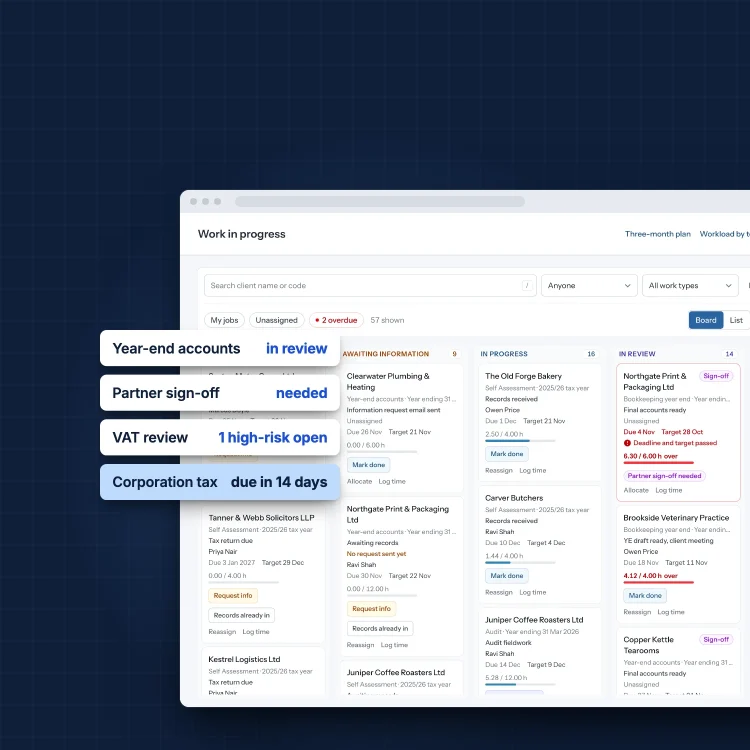
Work board of an accountancy practice platform

The Challenge Deadlines and context in people’s heads

The firm ran its work from spreadsheets and the task manager in its accounts software, and much of it lived in people’s memories. The partners wanted three things from a new system: no missed statutory deadlines, client context written down where everyone could find it, and compliance evidence that built up as people worked.

The system One place to run the practice

Every client, job and deadline is in one system the whole team works from. Staff see their own work and the board for the firm. Clients get a portal for requests, documents and signatures, plus links that work without an account for things like accepting a quote or signing a letter.

Xero, Companies House and the firm’s AML provider are connected, so records and figures arrive in the system instead of being retyped.

Work board of an accountancy practice platform with deadline and sign-off labels

How it works A client’s year, in one system

From enquiry to engagement letter

A prospect is filled in from Companies House, including its officers and people with significant control. With the client’s consent, the discovery interview can be recorded and transcribed, and the notes are pre-filled for the accountant to check. Quotes go out with up to three options, and the engagement letter is built from versioned templates with only the schedules for the services quoted.
AML and due diligence

ID documents, credit checks and a risk assessment on the firm’s own money-laundering questions run in order, with live checks through the firm’s AML provider. Question sets are versioned, so an old assessment always shows the questions it was answered against. Clearance from the outgoing accountant is requested through a link.

Board, review and sign-off

Each job is a client, a service and a period, and moves through stages grouped into five columns on the board. An audit waits until its accounts are done, and only a partner can pass the final sign-off. Reviewers raise points for the preparer on the job itself. The board shows each person’s load from their hours and booked leave, and people decide who does what.

Every statutory date in one list

Confirmation statements, year ends, corporation tax returns and payments, and VAT quarters are tracked for every client. The system checks Companies House for filings, so a job closes when its accounts are filed. Corporation tax reminders only go to companies with an unpaid amount recorded.

From timesheet to invoice

Time is valued at charge-out rates, and time that looks outside the quoted scope is queued for review. Quoted fees, work in progress and billing sit side by side, invoices are matched from Xero, and a Friday reminder goes to anyone with missing time.

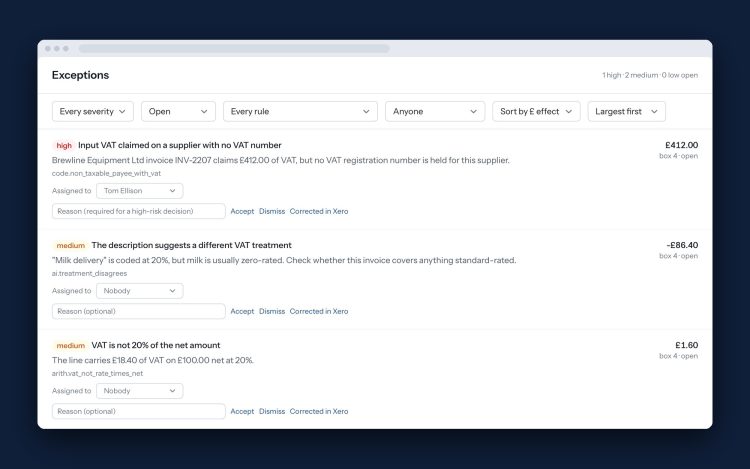
VAT review exceptions with severity, effect in pounds and a reason field

AI with guardrails What the assistant can and can’t do

AI does narrow jobs here: answering questions, drafting, transcribing interviews, and checking VAT lines and year-end movements.

Client emails Client emails the firm switches on

The system can email clients about chasers, quotes, engagement documents, year ends and corporation tax. Each of those emails starts switched off, an admin turns them on one at a time, and every change is audited.

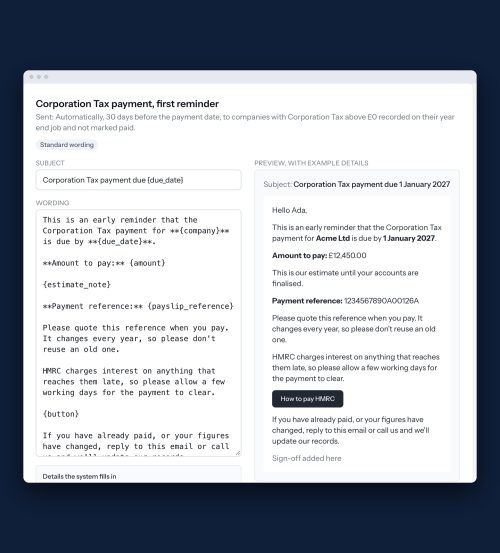
  • The firm can edit the wording of every client email, with a live preview and the standard wording one click away
  • Edits are versioned and only change emails sent after they’re published
  • Every email is filed on the client’s timeline, and a Monday report lists the automatic emails sent the week before
  • Test copies of the system can’t email a client at all
Client email editor with wording, merge fields and a live preview

Engineering Built to hold client data

The system holds money-laundering records, tax figures and staff HR files, so much of the engineering limits who can see and change what.

How the project ran From first brief to daily use

Call

Where the time was going

We talked with the partners about how the practice ran, and where work and deadlines were getting lost.

Brief

A roadmap in phases

A written brief split the work into phases, starting with onboarding, AML, deadlines and tasks, with security part of every phase.

Proof of concept

Working software, no live data

Every outside service had a stand-in, so the firm could try real workflows before anything live was connected.

Validation

Feedback rounds with the firm

Staff tested each area and sent their changes through a feedback button in the system and a ticket board.

Production

In daily use

The team has run its work on the system every day since the summer.

Next

Supporting the practice manager

The current phase looks at what the system can take on from the practice manager’s role, and what still needs a person.

Is your practice still run from spreadsheets?

Book a 20-minute call. We’ll look at where your firm’s deadlines, onboarding and billing live today, and what one system could take on.